Buying a home in Nampa involves more than a great floor plan. Water can shape how you use your yard, what you pay each year, and even whether a garden or pasture thrives in dry summers. If you understand irrigation and water rights early, you can avoid surprises and protect your investment.
This guide gives you the core of Idaho water law in plain language, shows how irrigation works in Nampa, and walks you through a practical due diligence plan before you close. You will learn what to ask for, what to verify, and where issues often arise so you can buy with confidence. Let’s dive in.
Idaho water rights basics
Prior appropriation in Idaho
Idaho uses the prior-appropriation system, often summarized as “first in time, first in right.” Senior rights have priority over junior rights when supplies run short. The Idaho Department of Water Resources (IDWR) administers permits, changes to rights, and enforcement statewide.
Elements of a water right
A water right record typically lists the source, point of diversion or well location, purpose of use, place of use, priority date, and the authorized volume or flow. You will also see the legal status, such as a decree, certificate, permit, or claim.
Status and why it matters
- Decreed or certificated rights are considered finalized and recorded.
- Permits are authorized but not perfected. Conditions may apply.
- Claims can exist from adjudications and may not offer the same certainty as a certificated or decreed right.
- Senior vs. junior priority determines who gets water first during shortages.
Nampa water context
Local sources and delivery
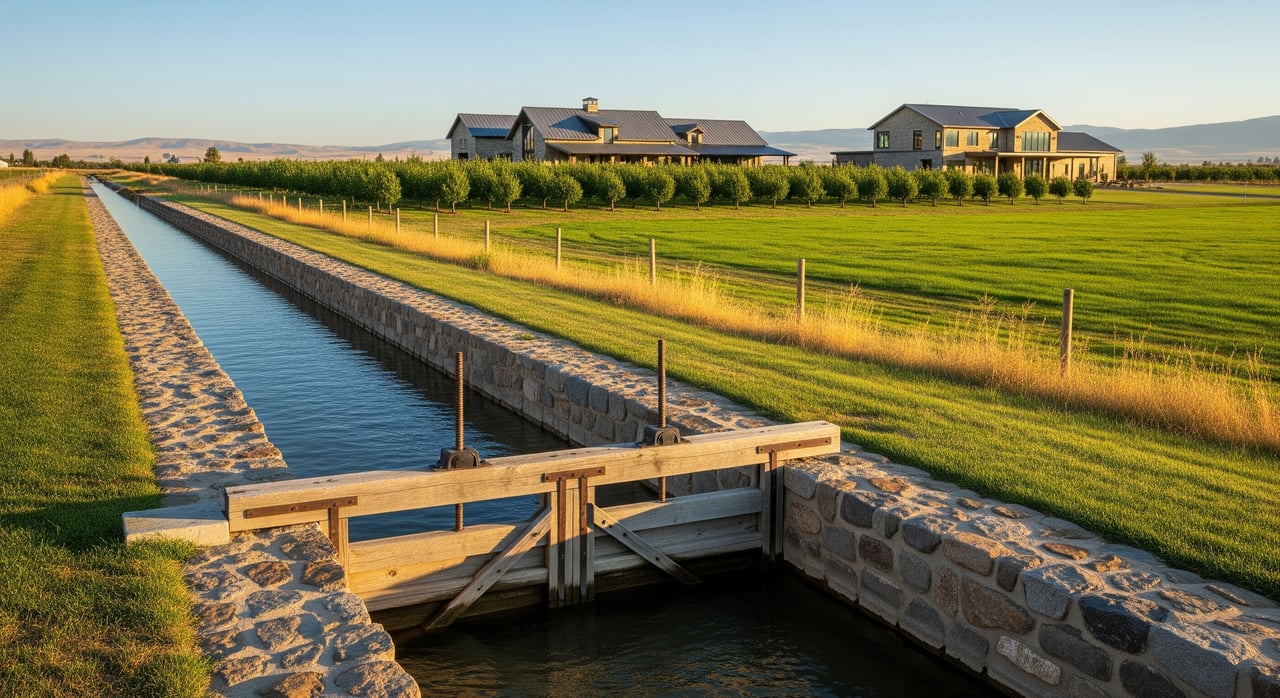
In the Nampa area, irrigation water commonly comes from surface water that moves through canals and laterals managed by irrigation districts or mutual ditch companies. Some properties use groundwater wells for domestic or irrigation uses. Many neighborhoods rely on municipal water for drinking, which is separate from any irrigation delivery through ditches or canals.
Who manages what
- IDWR is the statewide regulator and keeper of water-right records.
- Local irrigation districts and ditch or mutual companies operate canals, collect assessments, and manage delivery.
- City of Nampa utilities manages municipal water connections and availability.
- Canyon County offices hold deed and easement records that may affect ditches or canal access.
What to verify before you buy
Key documents to request
- Recorded deed language and any reservations of water rights.
- Water-right documentation for the parcel: certificate, decree, permit, or claim, plus an abstract of record showing priority date, volume, purpose, and place of use.
- Proof of irrigation district or ditch company shares if shares are separate from the land.
- Ditch company bylaws, easements, and assessment history.
- Seller’s water use history or delivery records for recent seasons.
- Well information, if present: well permit, completion report, pump size, production data, and water quality test results.
- Municipal water availability letter if you plan to connect to city water.
- Recent irrigation district tax and assessment statements.
Questions to ask and confirm
- Is the right recorded with IDWR and what is the priority date and season of use?
- Is the right decreed, certificated, permitted, or a claim? Is it perfected?
- Is the property inside an irrigation district or served by a mutual ditch company? What are the rates, assessments, and obligations?
- Do irrigation shares attach to the land or are they held separately?
- Have any changes been made to the right? Were approvals documented with IDWR?
- For wells: is the well permitted and are there any constraints or mitigation requirements?
Due diligence timeline
Early steps before or at offer
- Ask the seller for all water-right papers and any district or ditch documents.
- Contact IDWR for an abstract of water-right records tied to the parcel.
- Call the irrigation district or ditch company to confirm delivery history, current assessments, and any pending projects or restrictions.
- Verify municipal water availability and any connection requirements with the city if you plan to use city water.
Technical checks before closing
- Order a well inspection if there is a well. Review the well log, consider a pump test, and test water quality for drinking use.
- Obtain proof that irrigation assessments are current and request a delivery history if available.
- Identify ditch and canal easements that allow access for maintenance or limit building near infrastructure.
- Confirm whether your intended use needs an approved change of use or place of use through IDWR.
Contract protections
- Add a water-right contingency that allows time to review IDWR abstracts and district records.
- Use escrow holdbacks or require the seller to cure water-right title issues when needed.
- For complex situations, involve a water-rights attorney or a hydrologic consultant with Idaho experience.
Common issues and how they affect you
Transfers and change of use
Changing the point of diversion, place of use, or purpose of a right typically requires IDWR approval. Changes can take time and may require mitigation, engineering, or legal work. Do not plan on a quick change without first confirming feasibility.
Drought, curtailment, and priority
In dry years, deliveries can be reduced. Junior rights may be curtailed to protect senior rights. Knowing the priority date helps you gauge supply risk if you rely on irrigation for landscaping, pasture, or crops.
District assessments and ditch obligations
Irrigation districts and ditch companies charge assessments for operations and maintenance. These assessments are a recurring cost. Easements and maintenance access can limit where you place fences, structures, or landscaping.
Subdivisions and conversions
When irrigated farmland is split into smaller parcels, water rights may need to be proportionally allocated or changed with IDWR approval. Municipal development can also trigger water supply requirements. Verify the process before you plan future splits or development.
Domestic wells vs. irrigation rights
Domestic well permits are handled differently than irrigation rights and may have limits. In some areas, groundwater and surface water are connected, which can lead to mitigation requirements. Always verify well status, production, and water quality.
Red flags that merit a specialist
- The water right is only a permit or a claim, not certificated.
- No recorded proof that irrigation shares transfer with the land.
- Unpaid irrigation district assessments or pending special assessments.
- Past changes to a right without IDWR approval.
- Missing well permits or well logs, or poor production on pump tests.
- Easements that encumber usable portions of the property.
- Complex surface and groundwater mitigation obligations.
Cost and budgeting considerations
- Plan for annual irrigation district or ditch company assessments. These may be charged per acre or per share.
- Budget time and potential costs if you will seek a change in use or place of use. Engineering, legal support, and application fees can add up.
- Include well testing and any needed upgrades in your inspection budget if the property relies on a private well.
- Account for easement constraints when planning landscaping or improvements.
How we help you move forward
You should not have to decode water paperwork on your own. Our team helps you gather the right records, line up inspections, and coordinate with districts and city utilities so you can make a clear, confident decision. We keep your timeline on track, build strong contract protections, and connect you with trusted specialists when a transaction is complex.
If you are weighing two properties with different irrigation setups, we will walk you through the trade-offs in plain language and ensure the documents match your plans for the property.
Ready to explore Nampa with a clear plan for water and irrigation? Start your purchase with a focused strategy and hands-on guidance from the team that knows the Treasure Valley. Connect with Cheyenne Peterson & Carlette Napoles to schedule your consultation.
FAQs
What is a water right vs. irrigation shares in Nampa?
- A water right is a legal authorization tied to a source, place, and purpose, while irrigation shares are interests in a district or ditch company that manages and delivers water to land.
How do I check if a Nampa property has a valid right?
- Request the IDWR abstract and any certificate or decree, then confirm with the local irrigation district or ditch company that deliveries and assessments are current.
Can I use a domestic well to irrigate a large yard?
- Domestic wells are handled differently than irrigation rights and may have limits, so verify the well permit, production, and any applicable restrictions before relying on it.
What happens to irrigation rights when farmland is split?
- Splitting irrigated land often requires IDWR review to allocate or change rights, and municipalities may have additional requirements for development.
Do irrigation district assessments follow the property?
- Assessments are typically ongoing costs tied to served land or shares, so you should confirm the current amounts and payment status with the district.
Who maintains ditches or laterals on my lot?
- Irrigation districts and ditch companies maintain main infrastructure, but easements may require you to allow access and avoid building within the easement area.
Why does a priority date matter in drought?
- Senior rights with older priority dates are protected first during shortages, while junior rights may face curtailment or reduced deliveries.