Trying to decide where to plant roots in Eagle? With river views, foothill backdrops, and quick access to Boise, Eagle gives you real choices. The challenge is picking the lifestyle that fits your days, not just your wish list. In this guide, you’ll compare three clear lanes in Eagle: golf-course communities, acreage and horse properties, and low-maintenance suburban neighborhoods. You’ll see what each offers, what to watch for, and how to choose with confidence. Let’s dive in.
Eagle living at a glance
- Golf-course communities: Amenity-rich living with course access, clubhouses, and manicured surroundings. Lots often range from about 0.12 to 0.5 acres.
- Acreage and horse properties: Space, privacy, and room for barns or shops. Parcels typically run from 1 acre to 20+ acres, with many horse-friendly homes in the 2 to 10 acre range.
- Lock-and-leave suburban: Newer subdivisions with sidewalks, parks, and city services. Lots commonly fall between 0.12 and 0.25 acres, with some larger up to 0.5 acres.
Golf-course communities
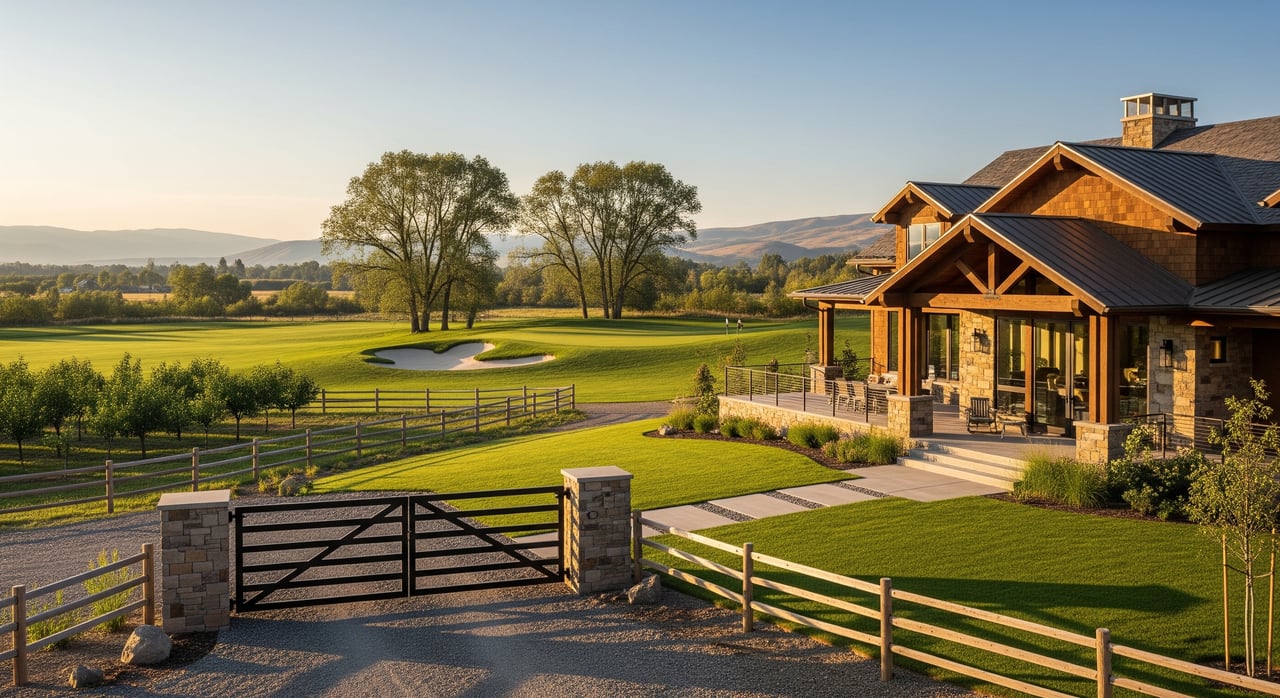
Eagle’s golf-focused neighborhoods attract buyers who want amenities, social connection, and a scenic setting without managing large acreage. Expect a mix of single- and two-story homes, architectural standards, and an active HOA presence that keeps curb appeal consistent.
What you’ll love
- Course access, practice facilities, and a clubhouse environment with social events.
- Lower yard work compared to large lots, thanks to smaller parcels and HOA-maintained common areas.
- Greenbelt and fairway views with walking paths that blend recreation and scenery.
Keep in mind
- HOA rules and fees apply, and some communities have design review for exterior changes.
- Course-adjacent homes can experience event noise or cart traffic at times.
- If the course is private or member-owned, membership costs and transfer rules vary.
Quick due diligence
- Request covenants, HOA financials, and clarity on assessments for course or amenity maintenance.
- Confirm golf membership options, guest policies, and waitlists where applicable.
- Review setback rules and view-corridor protections that may affect additions or remodels.
Acreage and horse properties
If you want space to breathe, keep animals, or build out a shop, the acreage lane delivers flexibility and privacy. Many of these properties sit outside city services and may fall under county or agricultural zoning. Utility setups and permitted uses vary, so plan for deeper due diligence.
What you’ll love
- Room for barns, arenas, gardens, and recreation, often with scenic views and quiet surroundings.
- Greater control over your property with fewer close neighbors.
- Potential for equestrian facilities and outbuildings tailored to your hobbies.
Keep in mind
- Many parcels rely on wells and septic systems, and some older properties may have surface-water irrigation rights.
- Maintenance costs can be higher for fencing, pasture, equipment, and access roads.
- Commutes to retail and services can be longer than in-town neighborhoods.
Quick due diligence
- Verify zoning and allowed uses with Ada County Planning and Zoning or the City of Eagle, and confirm whether the parcel is inside city limits.
- Obtain well yield data, septic records, and any water rights documentation. The Idaho Department of Water Resources regulates well permitting and records.
- Inspect fences, barns, corrals, and private drives. Check setbacks, manure handling requirements, and permits for arenas or large structures.
- Review floodplain maps for Boise River or canal proximity, and evaluate wildfire considerations in foothill areas.
Lock-and-leave suburban neighborhoods
Suburban subdivisions give you convenience and predictability. You’ll typically find city water and sewer, paved streets, sidewalks, parks, and nearby services. Many buyers choose this lane for easy upkeep, warranty-backed newer construction, and proximity to schools and everyday needs.
What you’ll love
- Lower maintenance and smaller yards that fit busy schedules.
- Close to grocery, restaurants, medical services, and neighborhood amenities.
- Consistent streetscapes, sidewalks, and community green spaces.
Keep in mind
- Smaller lot sizes mean less privacy than acreage settings.
- HOA rules and fees are common, even if modest, to maintain shared areas.
- Higher neighborhood density can increase peak-hour traffic inside the subdivision.
Quick due diligence
- Confirm HOA fees, covenants, and who maintains streets and common spaces.
- Verify school boundaries through the West Ada School District if that is important to your plans.
- Ask about nearby planned development that could affect traffic, noise, or views over time.
Commute, schools, and services
Eagle sits northwest of Boise within Ada County, with typical drive times to downtown Boise running about 20 to 35 minutes depending on location and traffic. Proximity to State Highway 44 and State Highway 55 can influence your commute and regional access.
Most of Eagle is served by the West Ada School District. School assignment can vary by exact address and change over time, so verify boundaries directly with the district.
Utility access differs by lane. In-town subdivisions commonly have city water and sewer. Many acreage parcels rely on private wells and septic systems, and some have surface-water irrigation for pasture. Natural features like the Boise River, canals, and foothills can shape site selection and insurance. Always confirm floodplain status and any canal or access easements on or near the property.
How to choose your lane
Start with how you live day to day, then layer in costs and long-term flexibility. Use this simple process to get to your best-fit neighborhood faster.
Step 1: Define daily rhythms
- List your top 5 weekly routines, from school drop-offs to trail time and tee times.
- Rank commute importance. If you want faster access to Boise, target locations with direct routes to Highway 44 or 55.
- Decide how much yard work and property care you want to own versus outsource.
Step 2: Match property type to care level
- Golf-course communities and suburban subdivisions typically mean less exterior upkeep and HOA-supported standards.
- Acreage and horse properties offer freedom and space, but expect hands-on maintenance and higher operating costs.
Step 3: Pressure-test budget and resale
- Factor ongoing costs like HOA dues, landscaping, potential golf memberships, feed and fencing, and utility differences between city services and wells or septic.
- Consider your likely resale audience. Suburban homes often draw the broadest buyer pool, while large equestrian properties serve a more specialized market.
Buyer checklists by lifestyle lane
Golf-course communities
- Obtain HOA covenants, financials, and any special assessment history.
- Confirm membership requirements, transferability, and guest access rules.
- Review irrigation or path easements that cross or border the lot.
Acreage and horse properties
- Verify zoning, permitted uses, and any conservation or access easements.
- Collect well logs, septic inspection records, and documentation for water rights.
- Check propane availability, power line proximity, and broadband options.
- Inspect access roads and determine who maintains them.
Suburban lock-and-leave
- Confirm school boundaries and bus routes if that matters to your routine.
- Review HOA rules, fees, and architectural guidelines for exterior changes.
- Ask about future infill or commercial projects nearby.
Work with a local guide
Choosing between golf, acreage, and suburban living comes down to daily life, property care, and long-term goals. When you have an expert walking you through zoning, wells and septic, HOA rules, and floodplain questions, the decision gets clear.
If you’re weighing options in Eagle, let us help you narrow the field, set up targeted tours, and negotiate with confidence. Connect with Cheyenne Peterson & Carlette Napoles to schedule your consultation.
FAQs
What should I know about HOA fees in Eagle golf communities?
- Fees and inclusions vary by community. Review HOA financials, amenity access, and any special assessment history before you commit.
How do water rights and wells affect Eagle acreage homes?
- Many acreage parcels rely on private wells, and some have surface-water irrigation rights. Request well yield data and water rights documentation during due diligence.
What commute times can I expect from Eagle to Boise?
- Typical drive times to downtown Boise run about 20 to 35 minutes, depending on your Eagle location and traffic.
What should I check before buying a horse property in Eagle?
- Confirm zoning and allowed animal uses, obtain well and septic records, assess fencing and barn condition, and review setbacks and manure management requirements.
Are Eagle’s suburban neighborhoods good for lock-and-leave living?
- Yes, many offer city water and sewer, sidewalks, parks, and modest HOA support that reduce exterior upkeep, which suits low-maintenance lifestyles.