Wondering what kind of home you can actually find in Caldwell? That is a smart question, because this market is not just one thing. You can find older cottages near the historic core, newer homes in planned neighborhoods, and larger parcels outside the city. If you want to understand how those options compare before you buy, this guide will help you sort through Caldwell’s housing styles and what each one may mean for your daily life. Let’s dive in.
Caldwell housing at a glance
Caldwell is a fast-growing city with a housing mix that still leans heavily toward ownership and detached homes. The city estimates 77,610 residents, up 29.36% since 2020, with 74.3% owner-occupied housing and an average household size of 3.03.
If you are picturing the typical Caldwell home, think single-family first. City housing data shows 78% of residential properties are 1-unit detached structures, while attached homes, multifamily properties, and manufactured housing make up smaller shares.
Price-wise, recent market snapshots place Caldwell in the high-$300,000s to low-$400,000s. Zillow reported a median sale price of $389,498 in April 2026, while Redfin reported $405,000 for the three months ending in May 2026.
That broad view matters because it explains why Caldwell can feel like several markets in one. Local housing officials note that typical starter homes are about $300,000 to $350,000, while much of the newer single-family construction lands in the $400,000 to $500,000 range.
Older homes and historic character
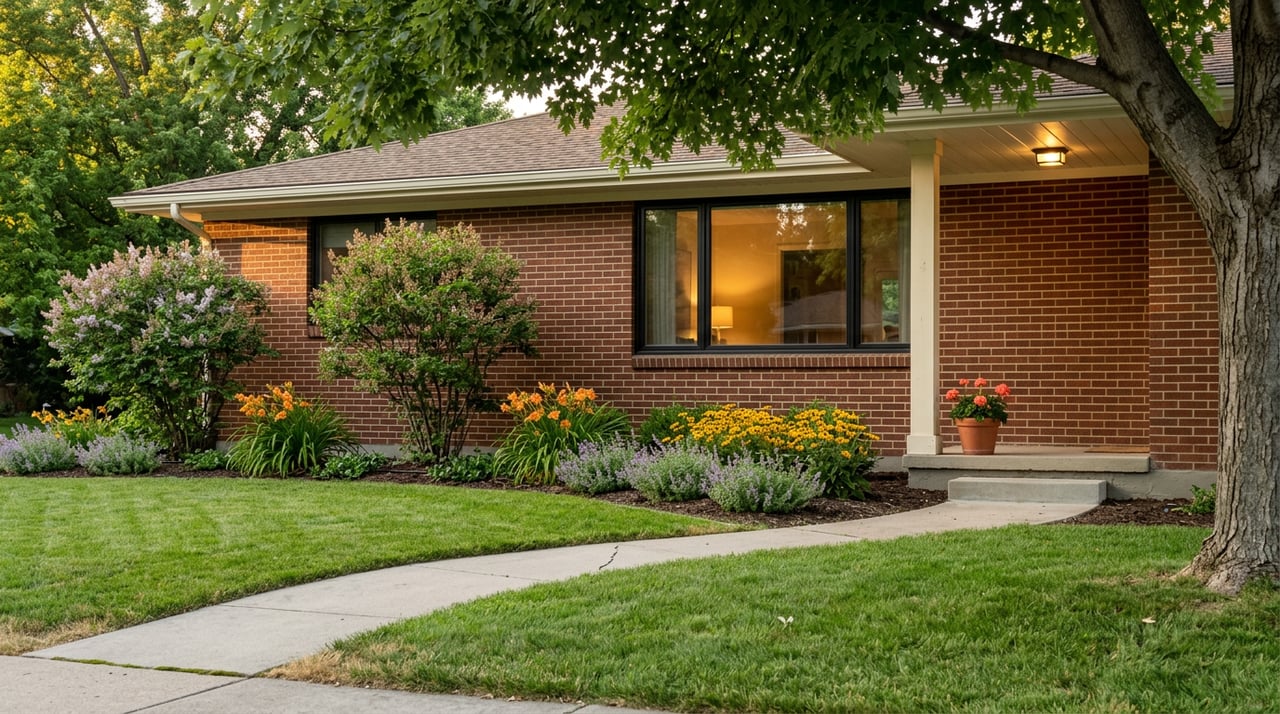
Caldwell has real variety in its older housing stock, but it is not spread evenly across the city. According to the city, older homes are concentrated in north Caldwell and on the south side across the railroad tracks.
The city’s 2026-2030 Consolidated Plan adds more context. It found that 57% of owner-occupied homes were built in 2000 or later, while 10% were built before 1950.
That means you are looking at a city with both newer growth and older pockets of character. If you like mature streetscapes, varied architecture, and homes that do not all look the same, these areas may stand out to you.
Steunenberg historic district
One of the best-known places for older homes is the Steunenberg Residential Historic District. The city describes it as one of Idaho’s most historically intact neighborhoods, with more than 330 residential properties and many homes listed on the National Register of Historic Places.
Homes in this district date from the 1880s through the 1950s. The city’s design guidelines identify styles such as Queen Anne, Colonial Revival, Craftsman, and American Bungalow.
For you as a buyer, that usually means more architectural detail and more visual variety than you would see in a modern subdivision. It can also mean smaller lots, original materials, and floor plans that reflect a different era of home design.
What living near downtown feels like
The historic core was shaped by early suburban planning, with tree-lined boulevards, parks, and homes placed within easy access of public transportation. Today, that layout still supports a more compact and pedestrian-friendly feel.
Downtown Caldwell also offers free on-street parking, nine free public parking lots, and access to Indian Creek Plaza and other event spaces. If you want a home that connects you to community events and a more walkable routine, that can be a meaningful lifestyle difference.
Historic-home rules to know
Historic character often comes with added review requirements. In the Steunenberg district, exterior changes visible from the street generally require Certificate of Appropriateness approval, though paint color is excluded.
That does not mean a historic home is the wrong fit. It simply means you should go in with clear expectations if preserving original character or planning exterior updates is part of your decision.
Newer subdivisions and infill options
If historic charm is one side of Caldwell, newer neighborhoods are the other. The city’s comprehensive plan supports a broader housing mix that includes duplexes, townhouses, cottage communities, and other housing types beyond traditional detached neighborhoods.
The same plan encourages higher-density residential development near downtown, commercial centers, mixed-use areas, and transit corridors. It also supports detached sidewalks, tree canopy, parks, community centers, and off-street pedestrian connections.
For you, that means newer neighborhoods may offer a more planned feel. Depending on the location, that can translate into connected streets, nearby parks, and easier access to daily services.
How lot sizes can differ
One of the clearest differences between older detached neighborhoods and newer infill patterns is lot size. In Caldwell’s residential zoning, minimum interior lot area ranges from 8,000 square feet in R-1 to 2,000 square feet in R-3.
That is a useful way to think about the spectrum of homes you may tour. Some neighborhoods will feel more spacious and traditional, while others will feel more compact and efficient.
What buyers often expect in newer neighborhoods
Newer subdivisions often appeal to buyers who want more standardized layouts and newer construction. Based on the city’s goals for connected neighborhoods and infill development, these areas may also offer easier access to city streets, parks, and utilities.
That said, not every newer neighborhood is identical. The best approach is to compare specific properties and blocks, not just the age of the home.
Cottage-style homes and smaller footprints
Caldwell’s local housing planning also points to demand for smaller homes. In the city’s 2026-2030 Consolidated Plan, officials identified a need for cottage-style homes around 650 to 800 square feet with 2 bedrooms and 1 bath.
That is notable because it highlights a practical gap in the market. If you are looking for a simpler layout, lower-maintenance living, or a smaller first home, this is a housing type city leaders have specifically recognized as needed.
In some cases, cottage-style living may show up in older parts of town. In others, it may appear as part of newer infill or planned housing concepts.
Acreage outside Caldwell
If your idea of home includes more land, more privacy, or room for a hobby farm setup, your search may naturally extend beyond city limits. Just outside Caldwell, Canyon County planning shifts toward rural-residential and agricultural living.
The county’s 2030 Comprehensive Plan describes several common land-use patterns. R-1 is one unit per acre, R-2 is one unit per half-acre, and AC-5 is one unit per five acres.
The AC-5 district is intended to support rural and farming lifestyles, including hobby farms, while also protecting nearby commercial agriculture. That makes acreage living a very different experience from buying in a city subdivision.
What acreage can mean day to day
Acreage often gives you more outdoor space and more separation from neighboring homes. It may also create more flexibility for animals or hobby-farm uses, depending on the parcel and county rules.
At the same time, rural property usually brings more upkeep and longer trips to services. Canyon County also emphasizes the area’s strong agricultural economy, so nearby agricultural activity can be part of the setting.
Utilities and site planning may be different
Acreage buyers should be prepared for more self-sufficiency than city-lot buyers. Recent county staff reports for rural-residential cases commonly reference domestic wells, septic systems, and irrigation plans.
That suggests utilities and site servicing often work differently outside the city, though not every property will be the same. It is smart to review these details early when you are comparing rural options.
Land division and parcel basics
County land rules also matter if future flexibility is part of your plan. Canyon County says administrative divisions in agricultural zones are reviewed by staff rather than through a public hearing, and each new parcel must be at least 1 acre, with up to four residential parcels possible from the original land in some cases.
If you are considering land for long-term use, these practical details can shape your options. They are worth understanding before you assume a parcel can be split or reconfigured later.
Agricultural tax classification
Some rural properties may have tax considerations tied to agricultural use. Canyon County says land actively devoted to agriculture may qualify for agricultural tax classification, and parcels over five contiguous acres may apply if they meet program requirements.
This is one more reason acreage purchases deserve careful review. A property’s use, size, and county classification can all influence how it fits your goals.
How to choose the right Caldwell style
The best Caldwell home for you depends less on trend and more on lifestyle. A downtown cottage, a newer subdivision home, and an acreage property may all fit your budget range, but they will live very differently.
If you want charm, walkability, and architecture with personality, the historic core may be the strongest match. If you want newer construction and a more planned neighborhood feel, newer subdivisions and infill areas may be a better fit.
If you want land, privacy, and room for rural uses, acreage outside Caldwell may offer what city neighborhoods cannot. The tradeoff is that you will likely need to think more carefully about utilities, maintenance, and county land-use rules.
A focused home search can save you time and help you compare the right properties from the start. If you want help narrowing down which Caldwell housing style fits your goals, Cheyenne Peterson & Carlette Napoles can guide you with local insight and a clear, low-stress plan.
FAQs
What is the most common home type in Caldwell?
- Detached single-family homes are the most common, making up 78% of residential properties according to city housing data.
Where are Caldwell’s older homes typically located?
- The city says older housing is concentrated in north Caldwell and on the south side across the railroad tracks, with the Steunenberg historic district being one of the best-known older-home areas.
What kinds of architectural styles appear in Caldwell’s historic district?
- The city’s design guidelines for the Steunenberg Residential Historic District identify Queen Anne, Colonial Revival, Craftsman, and American Bungalow styles.
What should buyers know about Caldwell historic-home updates?
- In the Steunenberg district, exterior changes visible from the street generally require Certificate of Appropriateness approval, except for paint color.
How do newer Caldwell neighborhoods differ from older ones?
- Newer neighborhoods may offer more compact lot patterns, a broader mix of housing types, and planning features such as sidewalks, parks, and off-street pedestrian connections.
How much land can you expect outside Caldwell city limits?
- In Canyon County, common rural land-use patterns include one unit per half-acre in R-2, one unit per acre in R-1, and one unit per five acres in AC-5.
What utility differences should buyers expect with Caldwell acreage properties?
- Recent county rural-residential case reports commonly reference domestic wells, septic systems, and irrigation plans, which suggests acreage properties often have different utility setups than city homes.
Are smaller cottage-style homes part of Caldwell’s housing conversation?
- Yes. Caldwell’s 2026-2030 Consolidated Plan identifies a need for smaller cottage-style homes around 650 to 800 square feet with 2 bedrooms and 1 bath.